
enrique sama
Artist Statement
Eric Samama, known artistically as Enrique Sama, is a French artist born in 1968 whose work emerges from a deeply personal and emotional search for human truth. His artistic journey began in an intimate and difficult moment: he started drawing his father while visiting him in a psychiatric institution and later on his deathbed. Without access to a camera, he was confronted only with a pencil, a blank sheet of paper, and the long, demanding process of drawing. At that time, his efforts received little recognition from his family, yet this experience established the foundations of his artistic practice, a slow, intense engagement with minimal tools.
Coming from a complex family background, with a Spanish Catholic mother and a Tunisian Jewish father whose suffering deeply marked his childhood, Sama eventually distanced himself from his family and sought freedom through art. For him, artistic practice became a form of liberation and personal reconstruction. His work is an ongoing search, pursued day and night.
Influenced by philosophers such as Cynthia Fleury and Julia Kristeva, Sama believes that art represents one of the most refined forms of sublimation and a path through which human beings can discover who they truly are. Encounters with the work of Alberto Giacometti and Egon Schiele profoundly shaped his thinking, as did the artistic struggles following the Second World War, particularly those of artists such as Zoran Mušič, a survivor of concentration camps. He also found inspiration in the Cobra movement, whose members sought freedom from conventional artistic constraints.
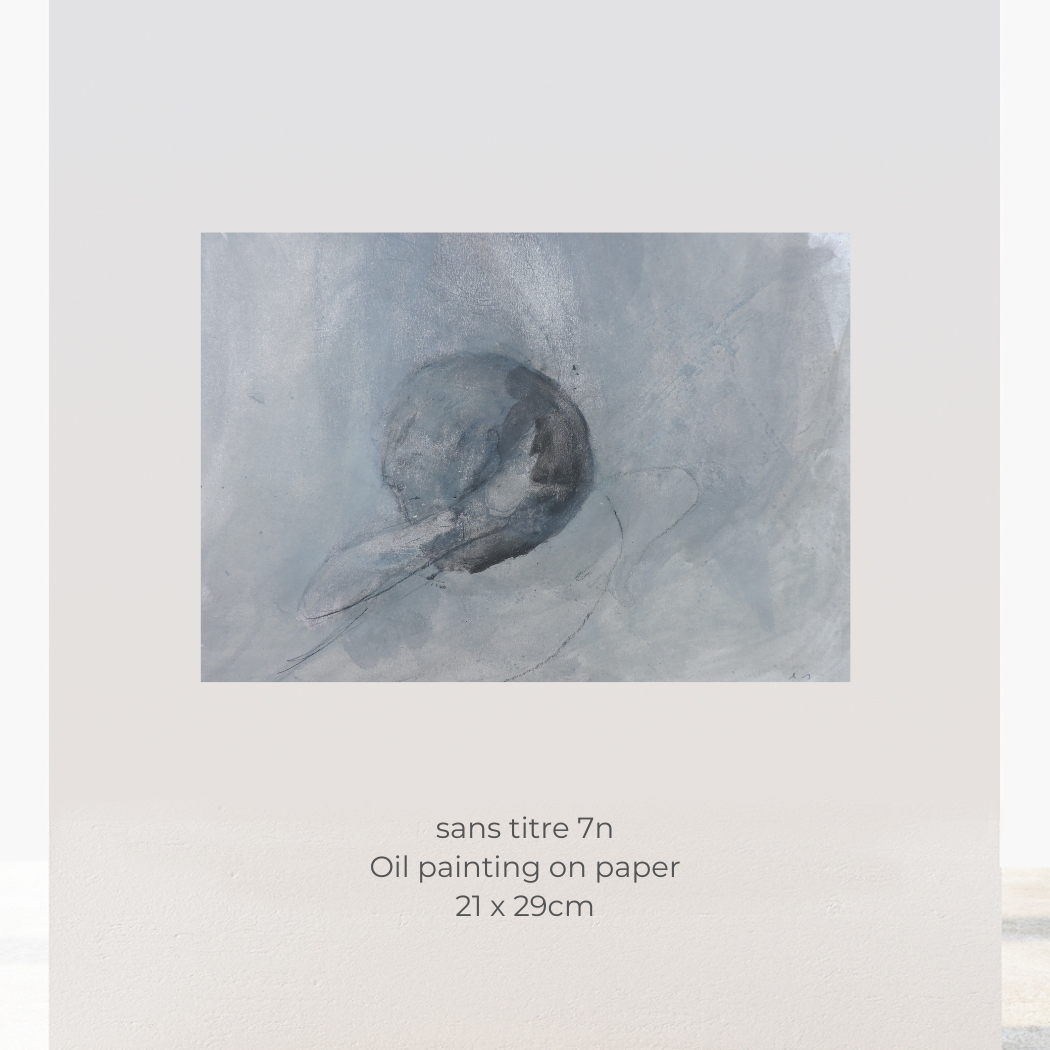
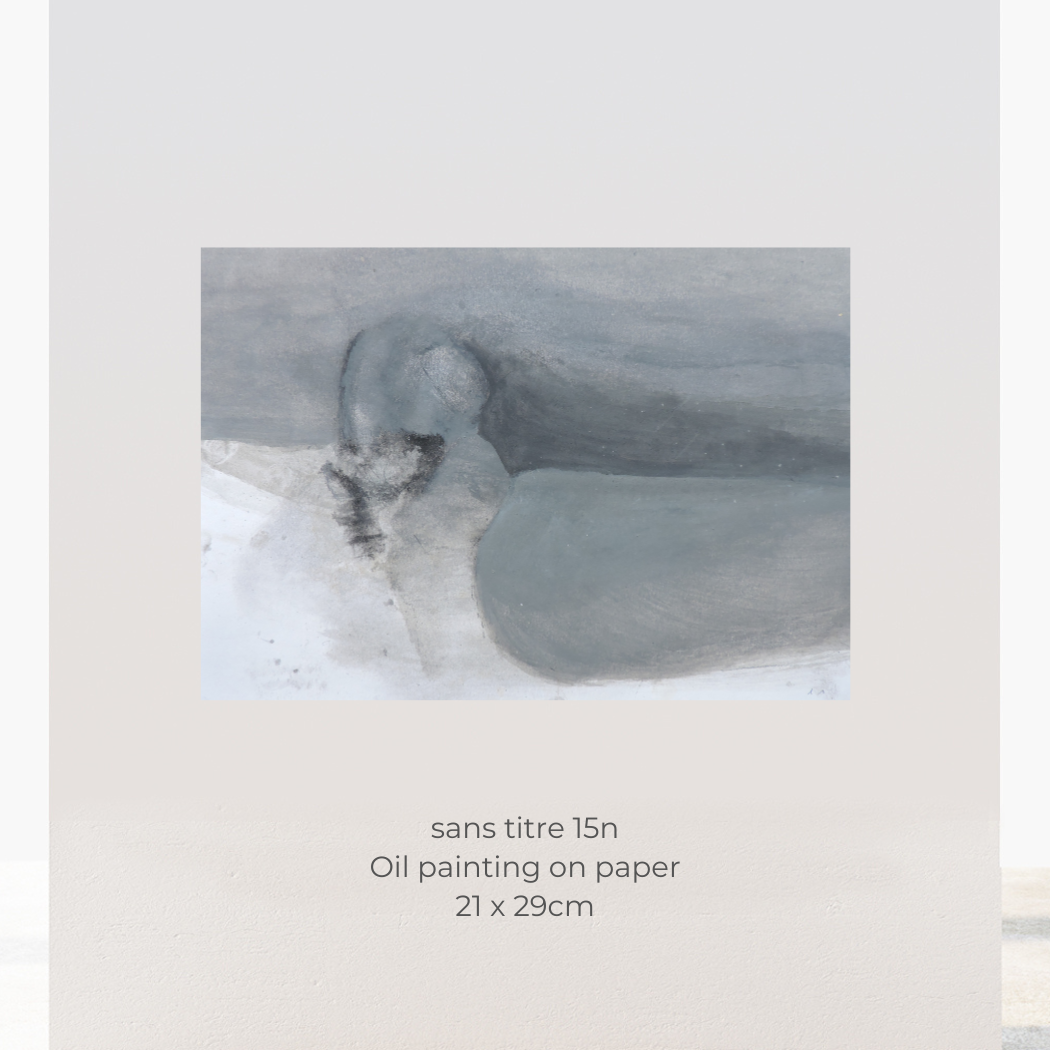
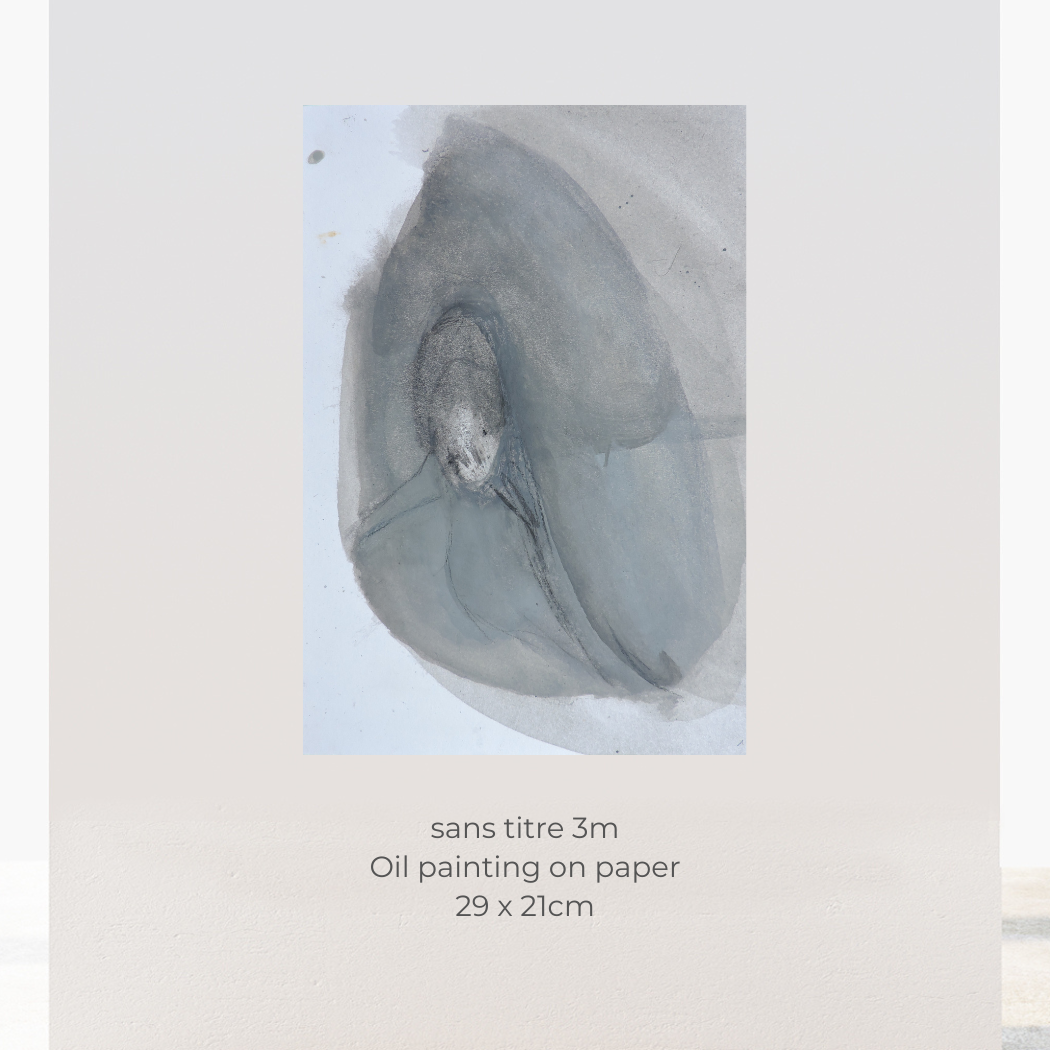
Dissatisfied with traditional drawing, Sama began experimenting with materials that normally resist one another — mixing water, gasoline, and oil paint. In one of these experiments, he noticed a strange eye emerging from a stain on the surface. Drawn into this accidental image, he instinctively began to complete the rest of the face, the body, and the surrounding space, drawing unconsciously from memories and emotions. What began as chance became a method: allowing the subconscious to guide the creation of forms.
Through this process, Sama relinquishes control and lets images emerge from deep emotional layers. His wife, upon seeing one of these works, remarked that the figure's expression was profoundly moving, revealing that, despite human differences, people share essential emotional experiences. This moment helped Sama realize that painting could become a universal language through which he could communicate with others.
His work often brings together materials that do not naturally mix, symbolizing the coexistence of contradictions within human experience — love and hatred, vulnerability and strength, life and death. Within these compositions, he seeks to evoke a childlike presence: a being capable of breathing freely and confronting the world with courage.
Human relationships remain central to his work. Sama incorporates elements drawn from the people around him — his wife, daughter, friends, and the broader diversity of humanity across cultures, identities, and countries. Animals and nature are equally important: from his five cats to the smallest twig in the natural world. For Sama, every living presence carries meaning.
A philosophical reference that deeply resonates with his work comes from the Greek philosopher Empedocles, whose words he encountered during a visit to the MAC VAL museum near Paris: “For once I was a young man and a young woman, a bush and a bird, and a mute fish in the sea.” This idea reflects Sama’s belief that human identity is fluid and interconnected with nature and the broader universe.
Sama’s artistic goal is not merely aesthetic but existential: to explore the human condition and elevate consciousness. His work responds directly to contemporary realities. He constantly observes global events, news, and social conflicts, absorbing them into his artistic reflections.
Although his work seeks to convey love and compassion, it does not ignore the darker aspects of existence: death, violence, hatred, and suffering. These tensions are precisely what drive the intensity of his painting. Through faces, bodies, children, elders, animals, fragments of wood, or wings, Sama searches for forms that allow existence to be expressed in its full emotional spectrum.
The psychoanalyst Marie Hémery has observed that Sama’s working method, which often involves eight to ten hours of continuous work until exhaustion, allows space for what could be described as a shared unconscious. Viewers often recognize within his images emotions that belong not only to the artist but to humanity as a whole.
Art critic Jannick Calvez, writing for Art Images Magazine during the exhibition Imprudent in Brest, described Sama’s practice as a chaotic and liberating creative experience in which the artist relinquishes control to allow raw and unsettling emotions to surface. She connected his work to reflections by the poet Yves Bonnefoy on Alberto Giacometti, whose relentless pursuit of truth in portraiture led him to destroy countless drawings he felt were insufficient.
For Sama, painting is both a survival instinct and a profound existential act. When working, he deliberately pushes himself to the limits of consciousness, producing dozens of drawings or paintings in a single session. The following day, he reviews them, continuing for days until the image feels complete.
The intensity of his artistic philosophy is also shaped by figures such as Antonin Artaud, whose writings on the tortured genius of Vincent van Gogh deeply influenced him. In his studio, Sama wrote on the wall: “Attack the paper… to reach gentleness.” Alongside Artaud, names such as Van Gogh, Francis Bacon, Vladimir Velickovic, Arnulf Rainer, and Marina Abramović remain constant presences in his artistic imagination.
Beyond painting, Sama also seeks collective artistic exchange. In 2017, he created an online initiative called “Essai de collectif” on Tumblr, bringing together around forty individuals from diverse cultural, social, and professional backgrounds. The project encouraged participants to imagine what kind of collective they wished to build and to propose themes reflecting global concerns, such as freedom, identity, and social justice.
Since the mid-2000s, Sama’s work has been exhibited internationally. His 2007 solo exhibition “Imprudent” earned him the title of Talent of the Year from the city of Brest. Subsequent exhibitions have explored themes of humanity and collective identity, including De l’humain finalement at the Musée Marzelles in Marmande.
By 2026, his work continues to reach an international audience through exhibitions and art fairs with galleries such as Galeria Azur in New York, Artio Gallery in Toronto, and Galerie Heligkeit in Munich, as well as participation in exhibitions in Venice and Florence. His artistic reflection continues to evolve, as he regularly revises and expands his written statements to reflect the ongoing development of his practice.
For Enrique Sama, painting remains an urgent act, a cry that is both raw and gentle, primitive and contemporary. Through this cry, he seeks not only to save himself, but to remind others of the shared emotional ground that unites humanity.